As we usher in a new year, there’s no better time to champion the incredible produce grown and raised right here in Britain. January and February often get labelled the “quiet months,” but step into a British farm shop or market and you’ll find they’re anything but. From robust winter vegetables to stunning seasonal seafood, these months offer bold flavours, honest ingredients and the kind of cooking that brings comfort to the table.
As an ambassador for Love British Food, one of my greatest joys is shining a spotlight on the unsung heroes of our culinary seasons. When we buy British, we support local farmers, reduce miles travelled, and keep our national food culture thriving—something I’m immensely passionate about.
Winter Vegetables — The Backbone of British Seasonal Cooking
January and February are peak months for hearty British-grown vegetables that stand up to the cold and offer brilliant flavour:
🥕 Carrots & Parsnips – Natural winter sweetness, perfect for roasting or turning into purees and soups.
🥦 Brassicas – Cabbage, Savoy, Sprouts and Cauliflower are in their prime. Try roasted sprout leaves with bacon, or cauliflower steaks on the grill.
🌱 Leeks & Onions – The flavour base of so many cottage pies, stews and broths.
🥔 Potatoes – Maris Piper, King Edward or Charlotte; Britain does potatoes better than anyone.
Winter cooking is about coaxing flavour through slow roasting, braising, grilling and seasoning well. Don’t underestimate the power of good rapeseed oil, thyme, and a squeeze of lemon.
Seasonal British Fruit — Subtle but Spectacular
While fruits are scarce, nature makes up for it in quality:
🍎 Apples & Pears remain outstanding through the winter — Pink Lady, Bramley, Conference — ideal for tarts, chutneys or baking into warm crumbles with custard.
If you can, track down heritage British varieties; their character is unforgettable.
The Best of British Seafood & Game
Our coasts and countryside offer magnificent seasonal proteins right now:
🐟 Cod, Haddock & Coley – Firm, flaky and perfect for grilling, stews or curing.
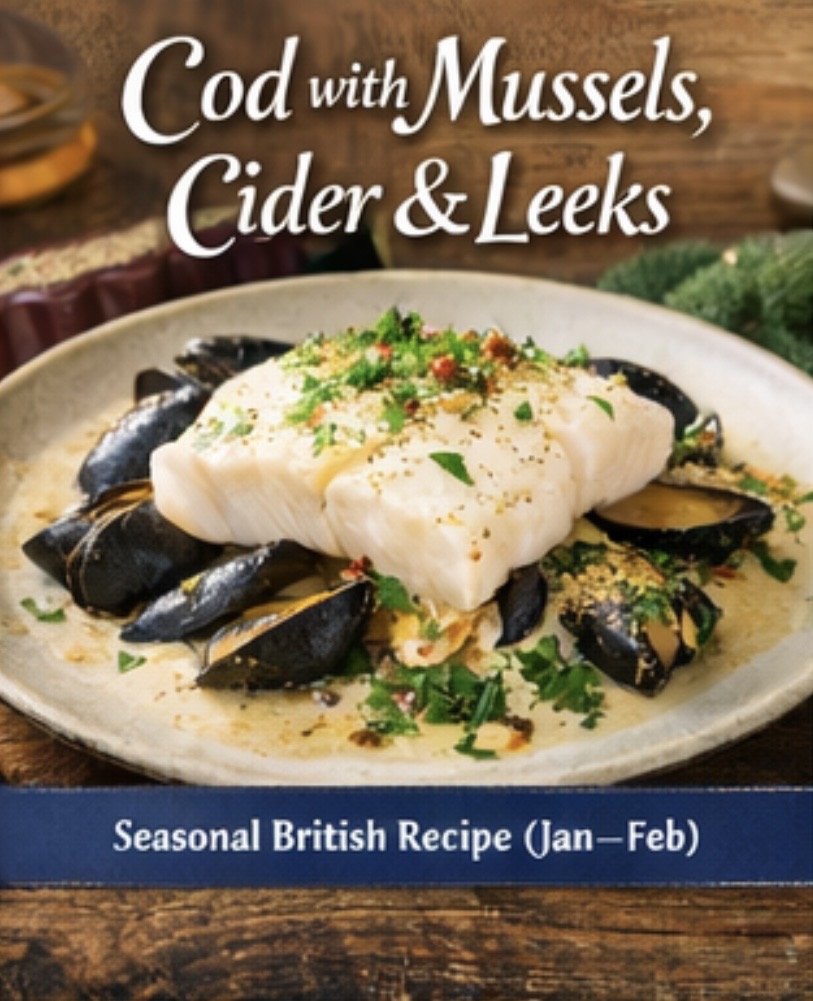
🦪 Oysters & Mussels – At their peak in cold waters; brilliant steamed with cider and leeks.
🦆 Duck & Venison – Winter game with real depth, pairing beautifully with root vegetables and winter fruits.
One of my favourite winter plates is pan-seared venison with parsnip puree and sautéed kale — simple, seasonal and unmistakably British.
Seasonal Ideas for Your Winter Menus
If you’re looking for inspiration, here are a few dishes that celebrate January & February produce:
- Cod loin with mussels, cider & leeks
- Slow-braised beef shin with caramelised onions & mash
- Roasted cauliflower steak with hazelnut butter
- Duck breast with red cabbage & Bramley apple
- Leek & potato soup finished with rapeseed oil
- Heritage carrots with cumin & labneh
Each uses ingredients at their best right now — a reminder that “seasonal” doesn’t need to be complicated.
Why Seasonal Matters
Championing seasonal British food isn’t just about taste (though flavour is unmatched). It’s about:
✔ Supporting local farmers & producers
✔ Reducing carbon impact
✔ Strengthening British food culture
✔ Eating foods at peak freshness and nutrition
Love British Food continues to lead this movement, and I’m incredibly proud to support their mission year-round — not just during harvest festivals and celebrations, but in the everyday choices we all make at the shop, in our kitchens, or on restaurant menus.
Closing Thought
January and February prove that Britain’s food story doesn’t stop in winter — it transforms. It becomes warmer, slower, more thoughtful and ultimately more delicious.
So, let’s embrace it. Buy British. Cook British. Love British Food.
Here is a delicious recipe for you to try:
📇 Recipe
Cod with Mussels, Cider & Leeks
Serves: 2
Prep Time: 10 mins
Cook Time: 20 mins
Seasonal Stars: Cod • Mussels • Leeks • Cider
Ingredients:
2 cod loins (approx. 150g each)
500g fresh mussels, cleaned
1 large leek, sliced
1 shallot, finely diced
200ml dry British cider
100ml double cream
1 tbsp British rapeseed oil
Salt & black pepper
Parsley, chopped (to finish)
Method:
Heat a pan with rapeseed oil, add shallot and leek, and gently soften for 4–5 minutes.
Pour in cider and bring to a simmer.
Add mussels, cover, and cook 3 minutes until they open.
Add cream and stir. Season lightly.
Place cod loins over the mussels, cover, and steam for 6–8 minutes until just cooked.
Scatter with parsley and serve immediately.
Serving Suggestion:
Serve with crusty bread or new potatoes to soak up the broth.